MoreExam
1. Question Content...
EXPLANATION
Answer: X - EXPLANATION Content.
Question1: Using a new assay, the following readings for Drug X concentration in a blood sample are obtained: 45 ng/mL, 43 ng/mL, 45 ng/mL, 44 ng/mL, 45 ng/mL, and 45 ng/mL. The true concentration of the drug was reported as 65 ng/mL using the gold-standard assay.On the basis of these data, the new assay should be characterized in which of the following categories?
Question2: Which of the following sources is most likely to publish the current recommendations from the Centers for Disease Control and Prevention regarding the use of recombinant hepatitis B Vaccine?
Question3: A 70-year-old man has completed a 14-day course of sulfamethoxazole/trimethoprim for Escherichia coli cystourethritis. The patient has a Foley catheter. A urine culture obtained 24 hours after the last antibiotic dose shows Candida albicans > 10x3 cfu/mL, RBC > 100 cells/hpf, and WBC = 10-20 cells/hpf. The patient is asymptomatic. What is the most appropriate management?
Question4: A 47-year-old patient with type 2 diabetes mellitus reports severe painful burning and tingling in the lower extremities. The patient has been taking ibuprofen and using topical capsaicin without relief. Which recommendation is the most appropriate therapy for this patient's peripheral neuropathy?
Question5: Initial efficacy data on an experimental drug in the United States are usually collected in:
Question6: A patient presents with palpitations and shortness of breath. A 12-lead ECG reveals a regular narrow QRS complex supraventricular tachycardia. What is the recommended first-line therapy?
Question7: A 58-year-old woman presents to the emergency department of a small rural hospital with recurrent chest pain that is unrelieved by three sublingual nitroglycerin tablets. Initial evaluation of her ECG and cardiac enzymes are consistent with non-STEMI. The woman is admitted for observation and given aspirin. Which of the following should be added to this patient's regimen to reduce her risk of death, MI, and recurrent ischemia?
Question8: When low molecular weight heparin is prescribed, in which of the following patient populations would monitoring anti-factor-Xa levels be reasonable to consider?
Question9: An oncology team that includes a pharmacotherapy specialist wishes to test the anecdotal observation that gabapentin reduces vincristine-induced neuropathic pain. Which of the following study designs would provide the best evidence for using gabapentin for this indication?
Question10: A 46-year-old patient begins treatment with allopurinol 300 mg daily following the onset of an acute gout attack due to elevated uric acid.The patient's other medications are:* Cyclosporine 800 mg daily* Prednisone 20 mg daily* Azathioprine 100 mg daily* Nifedipine extended release 90 mg dailySeveral days later there was an observed decrease in the patient's WBC count. Which drug interaction with allopurinol is most likely to account for this change?
Question11: A 40-year-old transplant recipient who is receiving cyclosporine develops seizures requiring anticonvulsant therapy. Because a drug interaction is likely to occur between cyclosporine and phenytoin, the pharmacotherapy specialist suggests that the resident do which of the following?
Question12: In which of the following scenarios should the error be reported to the Institute for Safe Medication Practices?
Question13: A drug use evaluation (DUE) of an institution's ACLS medication administration records yields the following data:* Rate of amiodarone use in patients with asystole = 30%* Rate of amiodarone use in patients with ventricular fibrillation = 90%* Rate of epinephrine use in patients with pulseless electrical activity (PEA) = 98%* Rate of vasopressin use in patients with pulseless ventricular tachycardia = 50% Which of the following treatments should be targeted for intervention?
Question14: A 58-year-old man recently diagnosed with chronic stable angina has discontinued metoprolol due to erectile dysfunction. Medical history also includes hypertension and type 2 diabetes mellitus. The patient's current medications include aspirin, lisinopril, metformin, and sublingual nitroglycerin as needed. BP is 128/76 mm Hg, and HR 88 bpm.Which of the following is the most appropriate choice to manage the patient's stable angina symptoms?
Question15: Healthcare Failure Mode and Effect Analysis (HFMEA) is described as a:
Question16: The prophylaxis of postsurgical deep vein thrombosis was reviewed in an article published 5 years ago. A researcher wishes to identify any studies since then that have used this article as a reference. What is the most appropriate database for this search?
Question17: Which of the following is an advantage of a crossover-design clinical trial?
Question18: A 58-year-old patient is admitted to the hospital with a temperature of 38.3°C, cough, and dyspnea. Rales are present at the left base, and chest X-ray reveals a left lower lobe infiltrate.Oxygen saturation is 88% on room air. Which of the following antibiotics is most appropriate?
Question19: A hospital's P & T Committee is considering whether a particular drug should be considered for therapeutic substitution. The pharmacotherapy specialist considers the acquisition cost of each medication and recommends using the drug with the lower cost. Which of the following types of analysis has the pharmacotherapy specialist used?
Question20: A 28 year old patient presents to a physician and reports persistent nasal discharge and facial tenderness for the past 15 days. The patient has no known drug allergies. Which recommendation would be best for treating this acute sinusitis?
Question21: A pharmacotherapy specialist is interpreting a published paper describing a randomized controlled, double-bling study that was conducted to evaluate the effects of antihistamines on the failure rate of treatment of otitis media in children. In the study, 250 children received antihistamines and 264 did not. All children received appropriate antibiotic therapy. Treatment failures occurred in four (1.6%) of the children who received antihistamines and in 13 (4.9%) of those who did not. The difference is statistically significant (p<0.05, chi-square). Which of the following statements about these result is appropriate?
Question22: A patient presents to the emergency department with an acute Ischemic stroke. The symptoms have been present for just over an hour.Which test would be most appropriate to help determine the patient's eligibility to receive t-PA?
Question23: A patient with previously well-controlled diabetes is suspected to be nonadherent with medication and diet. During the patient's last visit, the pharmacy student attempt to review education materials. However, the patient said that he forgot his reading glasses and asked if he could read through the information when he got home?Which of the following is the best course of action for the patient at his next visit?
Question24: A 65-year-old woman on chronic hemodialysis presents with difficulty breathing and inability to sleep. The patient has had shortness of breath, diaphoresis, and nausea, but has not vomited.She denies having abdominal pain, diarrhea, or chest pain. She has tachycardia and tachypnea, and exhibits peaked T waves with occasional PVCs on the ECG. Serum chemistry values are:* Sodium: 137 mEq/L* BUN: 125 mg/dL* Potassium: 7.2 mEq/L* Creatinine: 12.8 mg/dL* Chloride: 97 mEq/L* Glucose: 95 mg/dL* HCO3- : 11 mEq/L* Calcium: 8.5 mg/dL* Albumin: 3.1 g/dL* Phosphorus: 1.7 mg/dLWhich of the following should the pharmacotherapy specialist recommend for immediate therapy?
Question25: A pharmacotherapy specialist is contemplating Writing a case report on a suspected penicillin induced neutropenia in a patient who received intravenous penicillin G for treatment of infective endocarditis. The specialist has established a temporal relationship between the period of medication administration and the onset of neutropenia, and has excluded other potential causes of the adverse effect.Which of the following is the most appropriate next step in composing the case report?
Question26: A 25-year-old man with type 1 diabetes mellitus has recorded the following average blood - glucose concentrations for the past 5 days:Which of the following changes in his insulin regimen is most appropriate?
Question27: A 69-year-old Woman with chronic liver disease treated with furosemide and potassium chloride for ascites and peripheral edema presents with weakness and fatigue. Her serum laboratory Values are:* Sodium: 138 mEq/L* Potassium: 2.6 mEq/L* Glucose: 88 mg/dL* BUN: 33 mg/dL* Chloride: 101 mEq/L* HCO3- 26 mEq/L* Creatinine: 1.1 mg/dLAttempts to increase her serum potassium over the next 48 hours include intravenous replacement (240 mEq over this period), without success. The current serum potassium concentration is 2.8 mEq/L. Which of the following is the most appropriate test to obtain for this patient?
Question28: Which statement regarding vaccine administration in infants and children is correct?
Question29: What is the most appropriate source for identifying the generic name, classification, and adverse effects of a foreign brand-name medication?
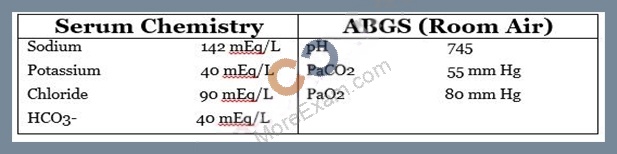
Question30: A patient with a nasogastric output of 8 L daily and respirations of 10 bpm has the following - laboratory values:This clinical information is most consistent with which of the following?
Question31: A 67-year-old patient is hospitalized for decompensated heart failure. The serum sodium concentration is 130 mEq/L on admission. Which of the following is the most appropriate approach to managing the patient's hyponatremia?
Question32: A 50-year-old patient is admitted for acute coronary syndrome with a past medical history of hyperlipidemia and diabetes. The patient was transferred to the cardiac care unit for intubation because of worsening condition with increased shortness of breath. Physical examination and laboratory results reveal:* BP: 140/90 mm Hg* HR: 90 bpm* RR:27 bpm* O2 Sat: 90% on 2L* Nasal cannula general: moderate distress* Chest: bibasilar rales noted* CV: S1, S2 present, + JVD 11 cm* EXT. bilateral pulses, 2+ pitting edema, warm extremities* BUN: 40 mg/dL* Serum creatinine: 2.1 mg/dL* Brain natriuretic peptide: 1120 pg/mLWhich of the following is the most appropriate first-line intravenous therapy for this patient?
Question33: Which of the following disease states has been associated with stress-related mucosal bleeding and is an indication for initiation of stress ulcer prophylaxis?
Question34: A 72-year-old patient, weighing 72 kg and measuring 173 cm tall, presents to the emergency department with an acute ischemic stroke. The symptoms have been present for just over an hour. The patient has a history of hypertension and is currently taking lisinopril 10 mg daily.The patient's evaluation reveals no intracerebral hemorrhaging. The current BP is 178/100 mm Hg. It is now 150 minutes from stroke symptom onset.Which of the following should now be administered?
Question35: A 50-year-old patient presents to the physician complaining of anxiety, insomnia, a depressed mood, and decreased energy level. Paroxetine therapy is initiated. Which symptom will be the last to respond?
Question36: A patient with renal failure is being treated with phenytoin and has an albumin concentration of1.7 g/dL. Which of the following is likely to be higher than the general population in this patient?
Question37: A study is conducted comparing two antibiotics for the treatment of UTIs. The results after 7 days of therapy demonstrated that Drug A was superior to Drug B in eradicating bacteria from the urine and eliminating signs and symptoms of infections. The investigators concluded that Drug A was significantly superior to Drug B (p<0.05). In subsequent studies, however, the two drugs were equivalent in efficacy.Which one of the following types of error apparently occurred in the first study?
Question38: A 70-year-old 45-kg patient is admitted to the ICU with a diagnosis of digoxin intoxication. The patient complains of nausea, blurred vision, and fatigue that have been present for 3 days. A cardiac monitor reveals a HR of 42 bpm, an irregular rhythm, and a type second-degree heart block. Current medications include digoxin 0.25 mg and furosemide 40mg for heart failure, both taken daily at 0800. The patient remains adherent to all medications despite nausea, including today's doses. Blood is drawn at 1200 with the following results:* Potassium: 6.0 mEq/L* Creatinine: 2.3 mg/dL* Digoxin: 1.7 ng/mLWhich of the following most appropriately describes the patient's digoxin concentration?
Question39: To correct the development of metabolic acidosis in patients receiving standard TPN solutions, which of the following is the best therapeutic intervention?
Question40: Prednisone 10 mg orally daily is prescribed for a 68-year-old 60-kg patient with acute temporal arteritis. The pharmacotherapy specialist would recommend which of the following?
Question41: For a 34-year-old Woman with a history of ethanol abuse, cirrhosis, ascites, and jaundice, which of the following is the most important factor predisposing her to hepatorenal syndrome?
Question42: A 55 year old woman being treated for hypothyroidism with levothyroxine 125 mcg daily is currently euthyroid. She now has menopausal symptoms and is receiving conjugated estrogens.What effect is this most likely to have on her thyroid function tests?
Question43: A hospital requests a policy and procedure document for the monitoring and reporting of significant adverse drug reactions. Which agency requires a policy for the reporting of adverse drug reactions by hospitals?
Question44: A nurse administering an injectable narcotic is stuck with the needle. Which of the following is the most important information about the nurse's immune status to determine appropriate bloodborne pathogen/hepatitis B procedures?
Question45: A 78-year-old woman presents to the outpatient clinic for workup for depression. Medical history includes hypertension, simple partial seizures, and osteoporosis. The patient reports a6.8 kg non-intentional weight loss over the past month. Home medications include lisinopril, hydrochlorothiazide, carbamazepine, and alendronate. The patient has been diagnosed with severe depression. Which antidepressant should be recommended for this patient?
Question46: In designing a clinical trial, the method utilized to deal with inherent differences between groups is to:
Question47: A study shows that the participants who received 6 months of a new oral anticoagulant after a venous thromboembolism were randomized to continue with the new oral anticoagulant (n =612) or to placebo (n = 611) for 18 months. Thromboembolism recurred in 12 subjects in the new oral anticoagulant group and 71 subjects in the placebo group (hazard ratio 0.17; 95% CI, 0.09-0.30; p < 0.001).Which of the following statements regarding these results is correct?
Question48: A 72-year-old woman with a long history of schizophrenia has been admitted to the state hospital because of a recent relapse while on risperidone 5 mg daily. It is decided to use an equivalent dose of ziprasidone. Which reference would most likely provide this information?
Question49: A 45-year-old patient develops neutropenia, fever, headache, meningismus, and lethargy after induction chemotherapy for acute lymphocytic leukemia. A lumbar puncture reveals 1,000 total nucleated cells with elevated CSF protein with gram stain showing Gram-positive rods. Which of the following is the best initial empiric therapy for this patient?
Question50: A 35-year-old patient presents with symptoms consistent with acute pharyngitis. The patient reports no other illnesses, no known drug allergies, and a medical history significant for generalized anxiety disorder. The appropriate therapy should be determined by testing for which of the following?
Question51: A 50-year-old woman experienced acute renal failure after receiving contrast dye for an imaging study. Her estimated creatinine clearance is now 20 mL/min. Her medications include:* Piperacillin/tazobactam 4.5g intravenously every 8 hours* Azithromycin 500 mg intravenously daily* Famotidine 40 mg orally twice daily* Enoxaparin 40 mg subcutaneously daily* Metoprolol succinate 100 mg orally dailyWhich drugs require dose reduction due to acute renal failure?
Question52: A shortage of parenteral acyclovir was just announced; a hospital has 25 vials on hand and uses20 vials in a typical month. The wholesaler has 250 vials on hand but will not receive any more supply for 4 months. What is the hospital's most appropriate response to the shortage?
Question53: A 49-year-old patient has been taking pregabalin for the treatment of fibromyalgia for one year with good relief of symptoms. However, this patient recently lost access to health insurance.Although she experienced excellent relief from pregabalin, she is unable to continue this therapy due to cost.Which of the following would be the best intervention?
Question54: According to the Centers for Disease Control and Prevention recommendations, administration of which vaccines must be separated by at least 4 weeks if the vaccines are not administered simultaneously?
Question55: A 76-year-old man has his first visit with a pharmacotherapy specialist for the management of his anticoagulation. The patient states that he started warfarin last week as instructed by his physician. He is able to explain the reason that he was started on anticoagulation therapy.During the interview, some of the specialist's questions go unanswered or are answered inappropriately. For example, when asked if he has had any bleeding, the patient states that his breathing is fine.Which will most likely be a barrier to the effective education of this patient?
Question56: An article in a clinical pharmacology journal describes a double-blind controlled trial comparing the efficacy of sumatriptan to a placebo injection for intractable migraine which used a 5 point Likert scale to evaluate headaches 2 hours after treatment. Which of the following is the most appropriate statistical test for analyzing the data?
Question57: A patient presents a first-time prescription for exenatide subcutaneously twice daily. Which of the following information should the pharmacotherapy specialist present during patient counseling?
Question58: Which of the following is a risk factor for the development of multidrug resistance in pathogens that cause nosocomial pneumonia?
Question59: A 21-year-old patient with leukemia is admitted to the hospital with a temperature of 38.9°C and a nonproductive cough 8 days after induction chemotherapy completion. Laboratory tests show a WBC count of 1,000 cells/ul (10% segmented neutrophils, 0% bands, and 90% lymphocytes) and a platelet count of 60,000 cells/uL. Chest X-ray reveals a small left lower lobe infiltrate. Blood, urine, and sputum cultures are obtained. What should be the recommendation for initial management?
Question60: What provides the best economic justification of the addition of a clinical pharmacist to a 200- bed - community hospital?